
By Windercare Animal Clinic
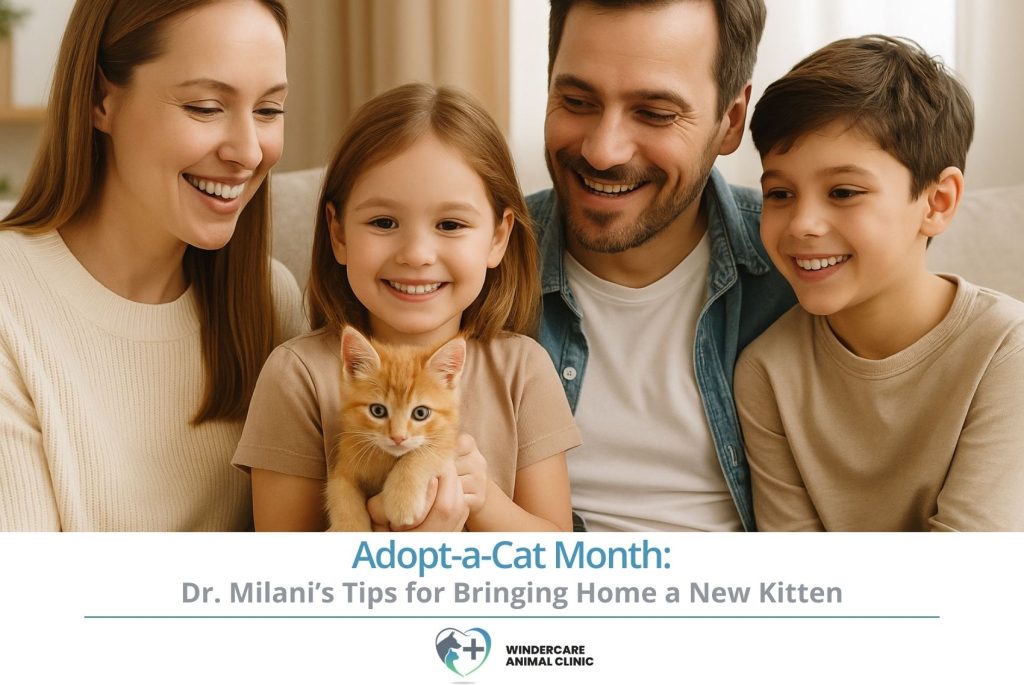
June is Adopt-a-Cat Month, and there’s no better time to welcome a new furry family member into your home. Whether you’ve adopted from a shelter, a rescue group, or a friend whose cat recently had kittens, Windercare Animal Clinic—and especially Dr. Milani—is here to help you start your journey with confidence and joy.
Bringing home a kitten is an incredibly rewarding experience, but it also comes with important responsibilities. From vaccinations and parasite protection to litter box training and nutrition, the first few months set the stage for a lifetime of health and well-being.
Below, Dr. Milani shares essential guidance for new kitten parents.
🐾 1. Vaccines: Building a Strong Foundation for Health
Kittens have developing immune systems, which makes a proper vaccine schedule absolutely critical. Most kittens begin their core vaccines at 6–8 weeks of age and continue receiving boosters every 3–4 weeks until they are about 16 weeks old.
Core Vaccines for Kittens
- FVRCP: Protects against Feline Viral Rhinotracheitis, Calicivirus, and Panleukopenia
- Rabies Vaccine: Legally required and essential for their safety
Optional (Lifestyle) Vaccines
Depending on your kitten’s environment and exposure risk, Dr. Milani may recommend:
- Feline Leukemia (FeLV) – especially for kittens who go outdoors or live with other cats
Why Vaccination Matters
Kittens are curious by nature and can encounter viruses even in what seems like safe environments. Staying on schedule reduces the risk of life-threatening illnesses and helps your kitten thrive.
🐾 2. Parasite Protection: Don’t Let Pests Bug Your Baby
Parasites are extremely common in young cats—especially those rescued or adopted from group environments.
Types of Parasites Kittens Face
- External parasites: fleas, ticks, mites
- Internal parasites: roundworms, hookworms, tapeworms
- Intestinal protozoa: coccidia and giardia
What Dr. Milani Recommends
- A fecal test during your kitten’s first wellness visit
- Monthly flea/tick preventatives—safe products formulated specifically for kittens
- Routine deworming, especially in the first 16 weeks
Early and consistent protection keeps your kitten comfortable and prevents parasites from spreading to people or other pets.
🐾 3. Litter Box Introduction: Set Your Kitten Up for Success
Most kittens naturally know what to do when introduced to a litter box, but the right setup ensures effortless training.
Dr. Milani’s Litter Box Tips
- Start small and easy to access: Shallow boxes are ideal for young kittens
- Use a soft, unscented litter: Strong fragrances may deter your kitten
- Keep the box in a quiet, low-traffic area
- Maintain cleanliness: Scoop daily and change litter regularly
How Many Boxes Should You Have?
A good rule of thumb: 1 litter box per cat + 1 extra. If you live in a multi-story home, keep a box on each level.
🐾 4. Nutrition: Feed for Growth and Wellness
Proper nutrition fuels healthy development—physically and cognitively.
Kitten Feeding Guidelines
- Choose a complete and balanced kitten-specific diet (wet, dry, or a combination)
- Feed small, frequent meals—kittens have high activity levels and small stomachs
- Provide fresh water at all times
- Avoid cow’s milk, table scraps, and dog food
Why Kitten Food Matters
Adult cat food lacks the extra calories, protein, and nutrients kittens need during critical growth periods. Dr. Milani can recommend trusted veterinary-grade diets tailored to your kitten’s needs.
Q&A: Your Kitten Questions Answered
Q: When should I bring my new kitten for a vet visit?
A: Ideally within the first 72 hours of adoption. This ensures early detection of any medical concerns and timely vaccinations.
Q: Can my kitten go outside?
A: Not until fully vaccinated—and preferably supervised or harness trained. Outdoor cats face risks like predators, parasites, and traffic.
Q: Should I microchip my kitten?
A: Absolutely. Microchipping significantly increases the chances of a lost pet returning home safely.
Q: How often should I feed my kitten?
A: Most kittens do well with 3–4 meals per day until about 6 months old.
Q: Can kittens live with dogs or other cats?
A: Yes—with proper introductions. Dr. Milani can guide you through safe, low-stress bonding techniques.
Q: When should I spay or neuter my kitten?
A: Typically around 4–6 months of age, depending on health, size, and lifestyle.
Visit Windercare Animal Clinic to Start Your Kitten Off Right!
Dr. Milani and the entire Windercare team are here to help your kitten grow into a happy, healthy member of your family.
📍 Address:
Windercare Animal Clinic
13610 Summerport Village Pkwy
Windermere, FL 34786
📞 Phone: (407) 347-8353
🌐 Website: https://windercarevet.com/
🗓 Appointments: https://windercarevet.com/appointments
Book your kitten’s wellness exam today—we can’t wait to meet your new feline friend!
Recent Posts
About Us
Small description of the practice goes here - maybe pull from the About Us page?