
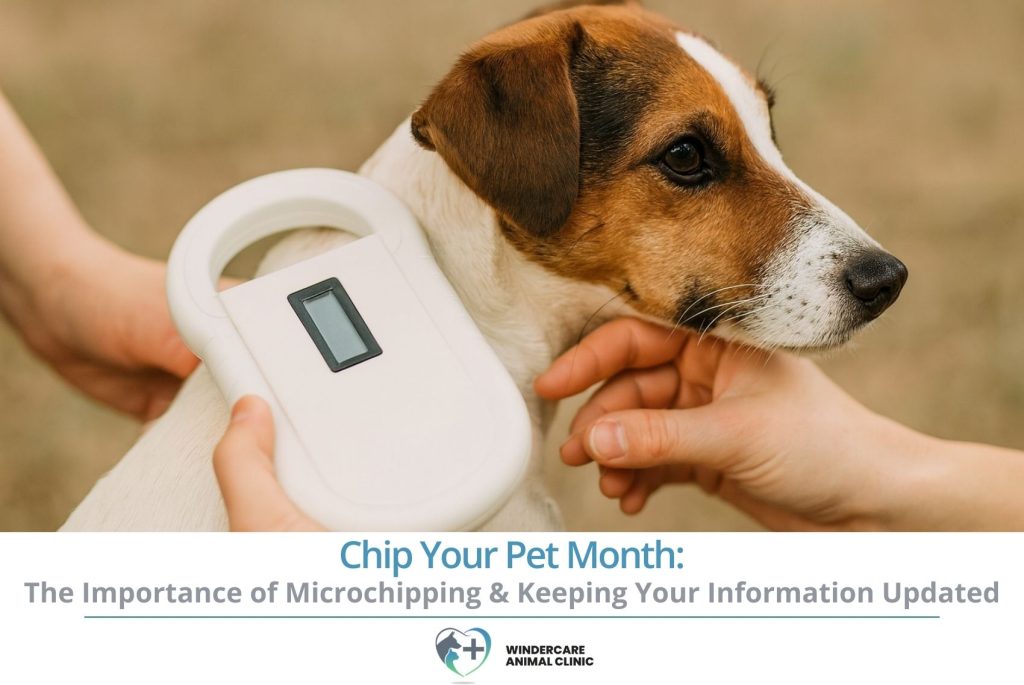
May is Chip Your Pet Month, making it the perfect time for pet parents to learn about the life-saving benefits of microchipping. At Windercare Animal Clinic, we’re passionate about helping families stay connected with their pets—no matter what. Microchipping is one of the easiest, most affordable, and most effective ways to make sure your pet can always find their way home if they ever become lost.
Every year, millions of pets go missing. Collars can break or slip off, tags can fade, and even the most well-trained animals may wander farther than expected. A microchip provides a permanent, reliable form of identification that gives your pet the best chance of being reunited with you.
What Is a Microchip?
A microchip is a tiny, grain-of-rice–sized device that is implanted just beneath your pet’s skin, usually between the shoulder blades. Each chip carries a unique identification number that links to your contact details in a secure national database.
If your pet is ever found and taken to a veterinary clinic or animal shelter, staff can scan the chip, look up your information, and contact you immediately.
Why Microchipping Is So Important
1. It Dramatically Increases Your Chances of Reunification
Statistics show that microchipped pets are much more likely to be returned to their families. Dogs with microchips are more than twice as likely to get back home, and microchipped cats are more than 20 times more likely to be reunited.
2. It’s Quick, Safe, and Painless
Implanting a microchip takes only a few seconds—similar to a routine vaccination—and does not require anesthesia. Most pets barely notice it happening!
3. It Works for a Lifetime
Microchips don’t require power, charging, or replacement unless damaged (which is very rare). Once your pet is chipped, it remains functional for life.
4. It Helps in Emergencies
If a pet is brought in injured without identification, a microchip ensures the clinic can contact you immediately for consent and treatment decisions.
5. It’s Required for Travel and Some Local Ordinances
Many travel regulations, boarding facilities, and pet insurance providers require microchipping. It’s also a smart long-term investment in your pet’s safety.
The Importance of Keeping Your Pet’s Microchip Information Updated
A microchip is only as helpful as the information it contains. If you move, change your phone number, or get a new email address, those changes must be updated in your pet’s microchip registry.
Outdated contact information is one of the top reasons chipped pets still struggle to be reunited.
At Windercare Animal Clinic, we can help you:
- Check that your pet’s microchip is still scan-readable
- Verify where your chip is registered
- Assist you in updating your contact information
If you’re not sure whether your pet’s microchip info is current, Chip Your Pet Month is the perfect time to find out.
How the Microchipping Appointment Works
A microchipping appointment is simple and quick:
- Scan for an existing microchip – We verify whether your pet already has one.
- Implant the chip – A tiny microchip is inserted using a sterile applicator.
- Register the chip – We’ll guide you through setting up or updating your account in the national database.
- Confirm readability – We scan the chip to ensure it’s properly placed and functional.
Your pet can go home immediately—no downtime, no special aftercare needed.
Chip Your Pet Month: Frequently Asked Questions (Q&A)
Q: Does microchipping hurt my pet?
The procedure is quick and comparable to a routine shot. Most pets tolerate it very well with little to no discomfort.
Q: Can a microchip track my pet’s location?
No. Microchips do not have GPS capabilities. They provide identification only when scanned by a vet or shelter.
Q: How old does my pet need to be to get microchipped?
Microchipping can be done at a young age, often during puppy and kitten visits, but older pets can be chipped anytime.
Q: What happens if I move or change my phone number?
You’ll need to update your information in the microchip registry. If you need help or aren’t sure where to begin, our team can assist you.
Q: Can the microchip move or stop working?
Microchips rarely migrate under the skin and are designed to last a lifetime. During annual exams, we can scan the chip to confirm it’s still working.
Q: My pet already has a collar and tags—isn’t that enough?
Collars and tags are helpful, but they can be lost or damaged. A microchip is a permanent form of identification that cannot fall off.
Schedule Your Pet’s Microchip Appointment
Protect your pet with the simple step of microchipping—and make sure your information is always up to date. Chip Your Pet Month is a great time to take action.
Book an appointment today:
🔗 https://windercarevet.com/appointments
Or call us directly—we’re here to help.
Windercare Animal Clinic — Contact Information
Windercare Animal Clinic
📍 13610 Summerport Village Pkwy
Windermere, FL 34786
📞 (407) 347-8353
🌐 https://windercarevet.com

