
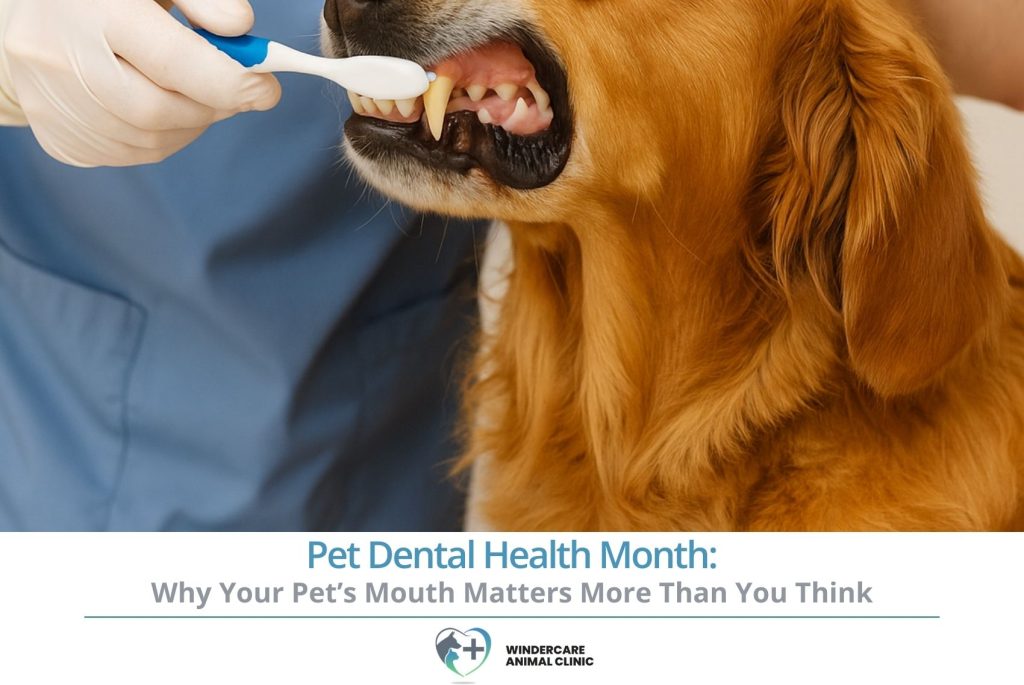
Every February, veterinarians across the country highlight a topic that often goes unnoticed—but has a major impact on your pet’s comfort, longevity, and overall health: dental care. At Windercare Animal Clinic, we believe that maintaining your pet’s oral health is one of the most important (and most overlooked) parts of preventive veterinary care.
Dental disease doesn’t just cause bad breath—it can lead to pain, tooth loss, infections, and even serious complications affecting the heart, liver, and kidneys. This Pet Dental Health Month, we’re shedding light on why your pet’s mouth matters more than you think and how you can protect their smile year-round.
What Is Dental Disease in Pets?
Dental (periodontal) disease is one of the most common health issues in dogs and cats. It typically begins with plaque—a sticky film of bacteria—that hardens into tartar when left untreated. Over time, this buildup pushes bacteria under the gums, causing inflammation, infection, and damage to the tissues supporting the teeth.
If dental disease progresses too far, it can become painful and irreversible. That’s why early detection and consistent care are essential.
Warning Signs of Dental Disease
Many pets hide discomfort, so dental issues often go unnoticed until they become advanced. Look out for these common signs of dental disease:
- Bad breath that doesn’t improve
- Red, swollen, or bleeding gums
- Visible tartar buildup on teeth
- Yellow or brown discoloration
- Drooling or dropping food
- Difficulty chewing or eating
- Pawing at the mouth
- Loose or missing teeth
- Facial swelling (can indicate infection)
If you’re noticing any of the above, it’s time to schedule a dental exam.
Why Professional Dental Cleanings Matter
While brushing at home is incredibly helpful, professional veterinary dental cleanings are the gold standard for keeping your pet’s mouth healthy. Here’s why they’re essential:
1. They Clean Below the Gumline
This is where dental disease begins—and where toothbrushes can’t reach. Under anesthesia, your pet’s veterinarian can safely remove plaque and tartar from these sensitive areas.
2. They Prevent Painful Disease Progression
Professional cleanings reduce the risk of infection, gum recession, and tooth loss.
3. They Include a Full Oral Exam
Your vet can detect early signs of disease, broken teeth, tumors, or other abnormalities not visible during an awake exam.
4. They Improve Long-Term Health
A healthy mouth means reduced inflammation and fewer bacteria entering the bloodstream, protecting vital organs.
5. They Allow for Safe, Stress-Free Treatment
Anesthesia is necessary to ensure a complete, comfortable cleaning for your pet.
During your pet’s dental procedure at Windercare Animal Clinic, we use advanced tools, digital imaging as needed, and tailored care plans to ensure their comfort and safety.
How You Can Support Your Pet’s Dental Health at Home
Consistent home care can greatly extend the benefits of professional dental cleanings. Here are a few easy ways to maintain your pet’s oral health:
- Brush their teeth daily (or as often as possible) using pet-safe toothpaste
- Offer veterinary-approved dental treats and chews
- Consider adding oral rinses or water additives
- Choose dental-friendly toys that help reduce plaque buildup
- Schedule annual dental exams to stay ahead of problems
Your veterinarian can recommend the best routine for your pet’s needs, age, and breed.
Pet Dental Health Q&A
Q: How often do pets need professional dental cleanings?
A: Most pets benefit from an annual cleaning, though some breeds—especially small dogs—require more frequent care. Your veterinarian can provide personalized recommendations based on your pet’s oral health.
Q: Is anesthesia really necessary for a dental cleaning?
A: Yes. Anesthesia allows your veterinarian to clean below the gumline, take dental X-rays, and thoroughly examine and treat your pet without stress or pain. “Awake” cleanings only address surface tartar and do not treat true dental disease.
Q: Is bad breath normal for pets?
A: No. While many pet owners assume bad breath is just part of having a dog or cat, it’s usually a sign of dental disease or other underlying issues.
Q: Can dental disease affect my pet’s overall health?
A: Absolutely. Oral bacteria can enter the bloodstream and impact the heart, liver, and kidneys. Dental disease is linked to systemic inflammation and reduced longevity.
Q: When should I schedule my pet’s first dental exam?
A: You can begin dental checkups as early as one year old for cats and small dogs, and around two years old for larger dogs. Early prevention makes a big difference.
Q: What if my pet seems fine—can’t I wait?
A: Many pets show no obvious signs of discomfort even with advanced dental disease. Regular exams and cleanings help catch problems before they become painful or costly.
Take Action This Pet Dental Health Month
There’s no better time than February to give your furry friend the gift of a healthy smile. Whether you’ve noticed signs of dental disease or simply want to be proactive, our team at Windercare Animal Clinic is here to help.
➡ Schedule a dental exam or cleaning today:
https://windercarevet.com/appointments
Contact Windercare Animal Clinic
Windercare Animal Clinic
📍 13610 Summerport Village Pkwy, Windermere, FL 34786
📞 (407) 347-8353
🌐 https://windercarevet.com
📅 Appointment Request: https://windercarevet.com/appointments

