
By Windercare Animal Clinic
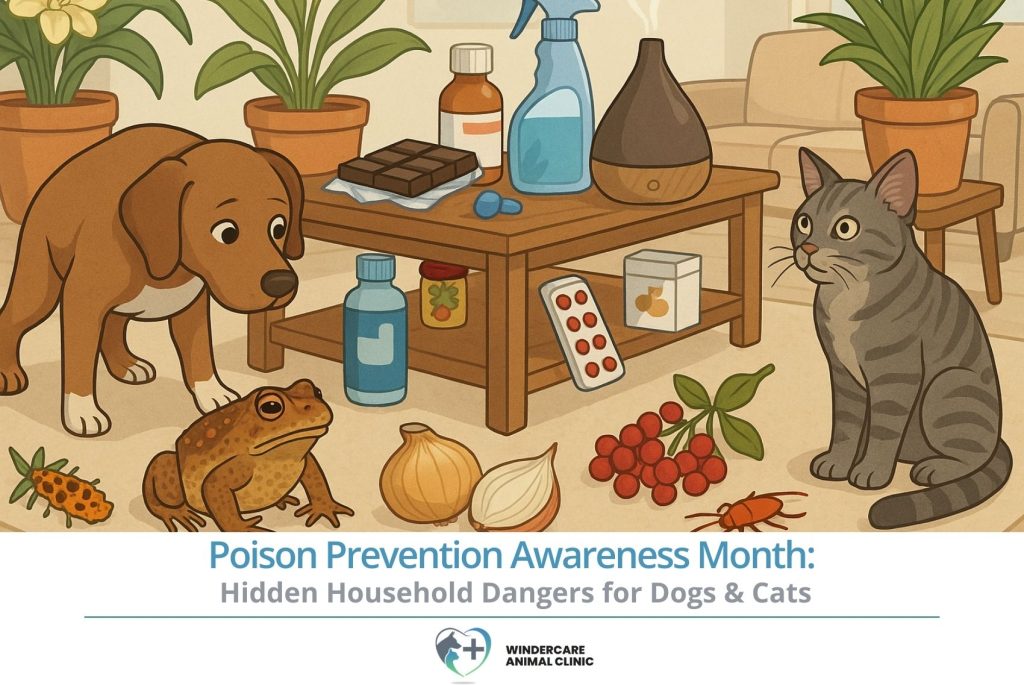
March is Poison Prevention Awareness Month, making it the perfect time for pet owners to review the everyday items—inside and outside the home—that pose hidden risks to dogs and cats. Florida’s warm climate and unique wildlife create additional hazards that many pet owners don’t realize are toxic.
At Windercare Animal Clinic, we’re committed to keeping pets safe year-round. Educating our community about common toxins is one of the most important ways we can help prevent emergencies.
Common Household Toxins That Harm Dogs & Cats
1. Human Medications
Over-the-counter pain relievers such as ibuprofen, acetaminophen, and cold/flu products can cause life-threatening issues when ingested by pets. Prescription medications, including antidepressants and ADHD drugs, are also among the top toxins reported nationwide.
Tip: Always store medication in high cabinets—not in purses or on countertops.
2. Cleaning Supplies
Bleach, disinfecting wipes, toilet bowl tablets, and floor cleaners can irritate the skin, mouth, and stomach. Even “natural” cleaners can be dangerous if concentrated.
Safe Practice: Keep pets out of the room until all surfaces are dry.
3. Essential Oils & Diffusers
Many pet owners are surprised to learn that oils such as tea tree, eucalyptus, peppermint, citrus, and pine can cause neurological symptoms, breathing issues, or liver damage—especially in cats.
4. Human Foods & Drinks
While some foods are safe, many common ingredients are toxic, including:
- Chocolate
- Grapes & raisins
- Xylitol (in sugar-free gum, peanut butter, toothpaste)
- Onions, garlic, chives
- Alcohol
- Caffeine
Even small amounts can cause severe reactions.
Florida-Specific Pet Toxins You Should Know
Florida pets face unique environmental risks. During Poison Prevention Awareness Month, we especially want pet parents to be aware of dangers that are common in our local area.
1. Toxic Frogs: Bufo / Cane Toads
One of the most dangerous threats to dogs in Central Florida is the cane toad (Bufo toad). These large, brownish toads secrete a potent toxin that causes drooling, seizures, shaking, and even sudden death.
If your pet bites or licks a toad:
Immediately rinse their mouth with running water for 10–15 minutes and call us or an emergency clinic.
2. Toxic Florida Plants
Many beautiful landscape plants are harmful to pets, including:
- Sago palms (extremely toxic; causes liver failure)
- Oleander
- Lantana
- Aloe vera (in large quantities)
- Peace lilies
- Philodendron & pothos
Note: Even outdoor mulch can contain cocoa mulch, which carries the same toxins found in chocolate.
3. Snail Bait & Outdoor Pest Control Products
Rodenticide (rat/mice poison), snail bait, and certain lawn treatments can cause internal bleeding, tremors, or organ failure. Pets may ingest these poisons directly—or indirectly by eating poisoned insects or rodents.
4. Household Insects
Florida’s warm climate keeps pests active year-round. Some insects are toxic to pets when eaten, including:
- Fire ants
- Lubber grasshoppers
- Certain caterpillars (like the saddleback caterpillar)
What to Do if Your Pet Is Exposed to a Toxin
Time is critical in poisoning cases. Follow these steps:
- Stay calm and act quickly.
- Do NOT induce vomiting unless a veterinarian specifically instructs you.
- Remove your pet from the source of the toxin.
- Keep the packaging or sample of the substance for identification.
- Call your veterinarian immediately.
ASPCA Poison Control: 888-426-4435
Pet Poison Helpline: 855-764-7661
Frequently Asked Questions (Q&A)
Q: What are the most common signs of poisoning in pets?
Symptoms vary by toxin but may include vomiting, drooling, shaking, dilated pupils, difficulty breathing, pale gums, or sudden collapse. If you notice anything unusual, call us right away.
Q: Can indoor cats be exposed to toxins?
Absolutely. Essential oils, lilies, cleaning products, and rodenticide hidden behind appliances are common indoor hazards for cats.
Q: How can I “pet-proof” my home?
Keep medications, cleaners, and food out of reach. Use childproof latches for curious pets. Secure trash cans, and avoid toxic plants inside and outside the home.
Q: Are Florida cane toads active year-round?
Yes. They are most active during warm, humid evenings, especially after rain. Dogs that enjoy chasing small, moving animals are at the highest risk.
Q: What should I bring to the clinic if my pet was poisoned?
Bring packaging, plant samples, or product receipts to help identify the toxin. This saves valuable time during treatment.
Q: Is activated charcoal safe to give at home?
No—do not attempt home treatment without veterinary guidance. Some toxins should not be absorbed with charcoal, and improper use can be harmful.
Protecting Your Pets Starts at Home
Poison Prevention Awareness Month is a reminder that protecting your pet doesn’t have to be scary—it simply requires awareness. At Windercare Animal Clinic, we’re here to help you identify risks and keep your furry family members safe.
If you ever suspect poisoning, please contact us immediately.
Windercare Animal Clinic – Contact Information
Windercare Animal Clinic
📍 13610 Summerport Village Pkwy
Windermere, FL 34786
📞 (407) 347-8353
🌐 https://windercarevet.com
🗓 Appointments: https://windercarevet.com/appointments

