

National Disaster Preparedness Month: Emergency Planning for Pets in Florida
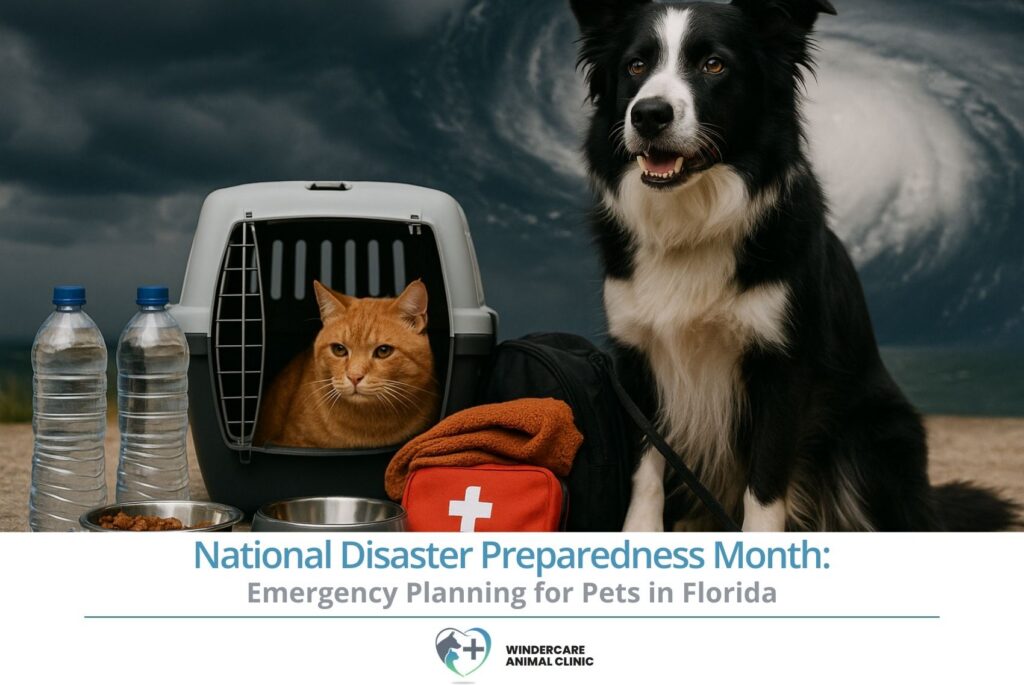
Hurricane-season readiness, evacuation kits, microchipping importance, and stress response tips from Dr. Milani & Dr. Lemon
Every September, Floridians enter a crucial period of reflection and preparation: National Disaster Preparedness Month. For pet owners, planning ahead is especially vital. Hurricanes, flooding, severe thunderstorms, and power outages can escalate quickly—and when they do, your pets depend on you to keep them safe.
At Windercare Animal Clinic, Dr. Milani and Dr. Lemon are committed to helping families in our community prepare for the unexpected. With the right precautions in place, you can protect your pets and reduce stress when emergencies arise.
1. Hurricane-Season Readiness: Start Preparing Now
Florida’s hurricane season brings a mix of unpredictability and potential danger. Preparing early gives you a major advantage.
Checklist for Pet Readiness
- Ensure all vaccines are current, especially rabies, Bordetella, and leptospirosis
- Maintain a minimum 1–2 week supply of medications, preventatives, and food
- Keep a secure collar with updated ID tags on your pet
- Verify your pet’s microchip information matches your current address and phone number
- Identify pet-friendly shelters or hotels before storm systems develop
2. Build a Complete Pet Evacuation Kit
Dr. Lemon emphasizes that an evacuation kit should be stored in an easy-to-reach location and ready to grab at a moment’s notice. Your kit should include:
Emergency Pet Kit Essentials
- Food & Water: 3–7 days of food, collapsible bowls, and bottled water
- Medications: 1–2 week supply, including anxiety meds if recommended
- Documents: Vaccine records, microchip info, ownership papers, recent photos
- First Aid Kit: Bandages, antiseptic wipes, tweezers, vet-approved medications
- Comfort Items: Favorite toys, blankets, or bedding to reduce stress
- Carriers & Leashes: Sturdy, labeled, and properly fitted
- Sanitation Supplies: Waste bags, litter, litter box, cleaning wipes
3. Microchipping: A Lifesaving Step During Disasters
When hurricanes strike, pets often become disoriented or escape during the chaos. Dr. Milani stresses that microchipping is one of the most effective tools for reuniting lost pets with their families.
Why Microchipping Is Critical
- Permanent identification that cannot fall off or become unreadable
- Quick scanning at shelters and veterinary clinics
- Essential proof of ownership during rescue operations
- Inexpensive and lasts a lifetime
If your pet isn’t microchipped—or if you’re unsure whether the data is up to date—Windercare Animal Clinic can assist.
4. Helping Pets Cope with Stress During Emergencies
Storms, unfamiliar environments, and sudden changes in routine can cause pets significant anxiety. Dr. Milani and Dr. Lemon offer the following guidance:
Behavior & Stress Management Tips
- Create a safe space with their crate, blankets, or favorite toys
- Use calming aids, such as pheromone sprays, supplements, or prescribed anxiety medication
- Play white noise or soothing music to drown out storm sounds
- Remain calm yourself, as pets mirror your emotional state
- Avoid punishment—fear-based behaviors are stress responses, not misbehavior
If your pet struggles severely during storms, talk to our veterinarians about customized anxiety-relief plans.
Pet Disaster Preparedness: Frequently Asked Questions (Q&A)
Q1: How early should I begin preparing my pet for hurricane season?
A: Ideally, preparation begins at the start of hurricane season (June), but September is an excellent reminder to review your plans. Keep emergency supplies ready year-round.
Q2: Are all emergency shelters pet-friendly?
A: No. Many shelters do not accept pets. Plan ahead by researching pet-friendly shelters, boarding facilities, and hotels. Our team can help guide you to resources.
Q3: What should I do if my pet has special medical needs?
A: Keep extra medications, a written care plan, and the name/contact of your veterinarian in your emergency kit. For conditions requiring refrigeration (like insulin), prepare a cooler with ice packs.
Q4: My pet gets panic attacks during storms. What can I do?
A: Many pets experience storm anxiety. We recommend scheduling a consultation to explore behavior strategies, calming products, and—if necessary—prescription medications.
Q5: Should I sedate my pet during an evacuation?
A: Sedation is usually not recommended during evacuations, as it can affect coordination and breathing. However, anti-anxiety medication may help in certain cases. Speak with Dr. Milani or Dr. Lemon first.
Q6: What if I must evacuate without my pet?
A: Never leave pets behind during mandatory evacuations. If you must leave unexpectedly, notify rescue services or neighbors immediately and leave posters on your door indicating pets are inside.
Q7: Can cats and small animals use the same type of emergency kit as dogs?
A: Yes, but tailor supplies to the species. For example, cats need litter; small mammals require habitat bedding and species-specific food.
Stay Prepared — Your Pets Are Counting on You
National Disaster Preparedness Month is a powerful reminder that planning ahead saves lives. By taking steps now, you ensure your pets remain safe, healthy, and by your side during any emergency.
The Windercare Animal Clinic team is here to help you build a personalized disaster-preparedness plan for your pets.
Contact Windercare Animal Clinic
Windercare Animal Clinic
📍 13610 Summerport Village Pkwy
Windermere, FL 34786
📞 (407) 347-8353
🌐 https://windercarevet.com/
📅 Appointments: https://windercarevet.com/appointments
Recent Posts
About Us
Windercare Animal Clinic in Windermere, FL combines modern veterinary medicine with the personal attention and consistency of an independently owned practice. Dr. Peiman Milani provides individualized care for dogs and cats, with services ranging from preventive care and diagnostics to same-day sick visits and house calls. With the same veterinarian at each visit, low-stress handling, and flexible care options, Windercare creates a more comfortable and connected veterinary experience for pets and their families.