

National Immunization Awareness Month: Why Vaccines Are Essential for Florida Pets
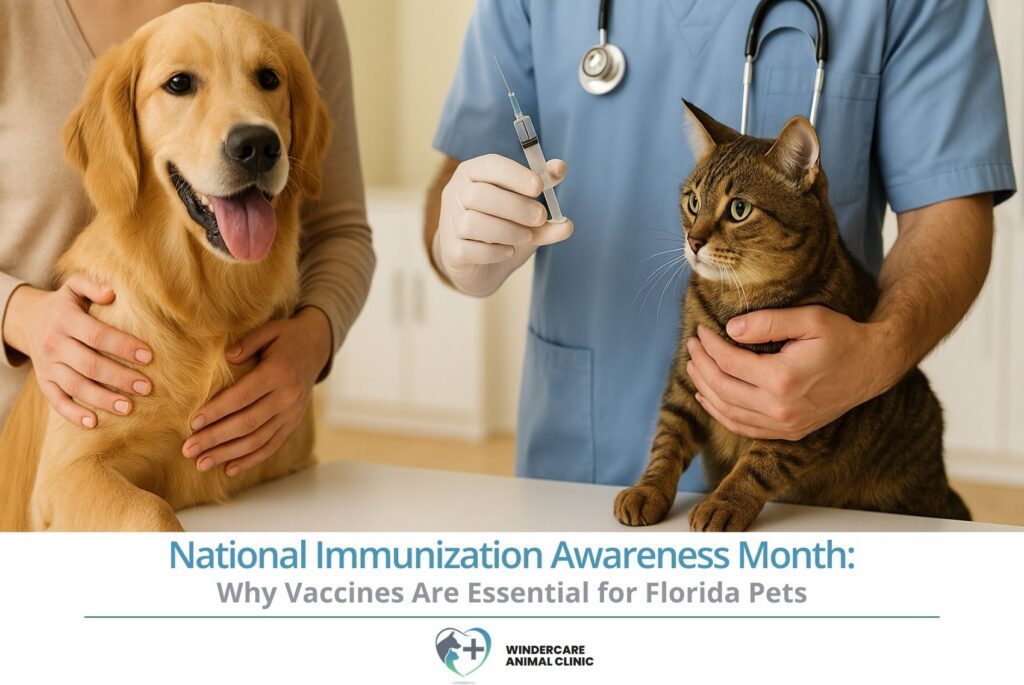
August is National Immunization Awareness Month, making it the perfect time to revisit one of the most important aspects of your pet’s long-term health: vaccines. Florida pets face unique health risks due to our warm climate, abundant wildlife, and year-round mosquito and parasite exposure. At Windercare Animal Clinic, we’re committed to helping Windermere families protect their cats and dogs from preventable diseases with safe, effective, and veterinarian-recommended vaccines.
In this guide, we’ll break down core vaccines, lifestyle-based vaccines, and local disease threats like Leptospirosis and Canine Influenza—all crucial for keeping Florida pets healthy.
Why Vaccines Matter for Florida Dogs and Cats
Vaccines strengthen your pet’s immune system and prepare their body to fight harmful viruses and bacteria. Many of these diseases can be:
- Life-threatening
- Highly contagious
- Costly or difficult to treat
- Preventable through routine vaccination
Because Florida is a hotspot for infectious diseases and wildlife exposure, vaccinations are not just recommended—they’re essential.
Core Vaccines for Dogs and Cats
These vaccines are recommended for all pets, regardless of lifestyle.
Core Vaccines for Dogs
Rabies
Required by Florida law. Rabies is fatal and can spread to humans.
DHPP (Distemper, Hepatitis, Parvovirus, Parainfluenza)
Protects against multiple severe and sometimes deadly viral infections. Parvovirus, in particular, is extremely common in Florida.
Core Vaccines for Cats
Rabies
Legal requirement and crucial for preventing a deadly zoonotic disease.
FVRCP (Feline Viral Rhinotracheitis, Calicivirus, Panleukopenia)
Protects against severe respiratory and gastrointestinal diseases.
Lifestyle-Based (Non-Core) Vaccines for Florida Pets
Depending on your pet’s activities, environment, and travel, our veterinarians may recommend additional vaccines.
For Dogs
Bordetella (Kennel Cough)
Recommended for dogs who:
- Visit groomers
- Attend daycare or boarding
- Go to dog parks
Canine Influenza (CIV)
Florida is a known hotspot for outbreaks, especially in multi-dog environments. CIV is highly contagious and causes severe respiratory illness.
Leptospirosis
Extremely important in Florida due to:
- High rainfall
- Wildlife exposure
- Standing water
Leptospirosis is a bacterial disease spread via contaminated water and wildlife urine—and it is zoonotic, meaning humans can catch it too.
Lyme Disease
Important for dogs exposed to ticks during hiking, travel, or yard time.
For Cats
Feline Leukemia (FeLV)
Recommended for:
- Outdoor cats
- Cats who spend time on patios
- Cats exposed to other felines
FeLV suppresses the immune system and is one of the leading infectious killers of cats.
Local Florida Disease Risks Every Pet Owner Should Know
Florida’s climate makes our pets more vulnerable to several preventable diseases. At Windercare Animal Clinic, we see these risks regularly:
1. Leptospirosis
- Spread through puddles, lakes, and wet grass
- Common in neighborhoods with raccoons, squirrels, and opossums
- Can cause kidney and liver failure
- Protects both pets and people
2. Canine Influenza
- Outbreaks occur statewide
- Easily spreads in grooming facilities, boarding kennels, and dog parks
- Symptoms include cough, fever, nasal discharge, pneumonia
3. Parvovirus
- Extremely common in Florida
- Lives in the soil for years
- Highly contagious and life-threatening for unvaccinated puppies
4. Rabies
- Wildlife such as bats, raccoons, and foxes remain a statewide concern
- Required vaccination protects your pet and your family
FAQs: Pet Vaccinations in Florida
How often does my pet need vaccines?
Adult pets typically need core vaccines every 1–3 years, depending on the vaccine type. Puppies and kittens require a series of boosters for full protection.
Are vaccines safe?
Yes. Side effects, if any, are usually mild and short-lived. The diseases vaccines prevent are far more dangerous.
Why does my indoor cat need vaccines?
Indoor cats can still be exposed to viruses through:
- Carried-in contaminants
- Escaping outdoors
- Contact with visiting pets
Rabies and FVRCP remain essential.
Can vaccines prevent everything?
Vaccines greatly reduce the severity and risk of infection, but no vaccine is 100% guaranteed. However, vaccinated pets experience significantly milder symptoms.
What vaccines do puppies and kittens need?
Young pets require a series of shots starting at 6–8 weeks of age. Our team can provide a personalized schedule.
Does my dog need Leptospirosis if we live in a suburban area?
Yes. Lepto is common in all Florida neighborhoods due to wildlife and wet environments—not just rural areas.
Schedule Your Pet’s Vaccinations at Windercare Animal Clinic
Keeping your pet healthy starts with prevention. During National Immunization Awareness Month, we encourage Windermere pet parents to review their pet’s vaccine status and schedule any needed boosters.
Windercare Animal Clinic
📍 13610 Summerport Village Pkwy
Windermere, FL 34786
📞 Phone: (407) 347-8353
🌐 Website: https://windercarevet.com/
🗓 Appointments: https://windercarevet.com/appointments
Let us help your pet live a longer, healthier, and happier life—book their vaccination appointment today!
Recent Posts
About Us
Windercare Animal Clinic in Windermere, FL combines modern veterinary medicine with the personal attention and consistency of an independently owned practice. Dr. Peiman Milani provides individualized care for dogs and cats, with services ranging from preventive care and diagnostics to same-day sick visits and house calls. With the same veterinarian at each visit, low-stress handling, and flexible care options, Windercare creates a more comfortable and connected veterinary experience for pets and their families.